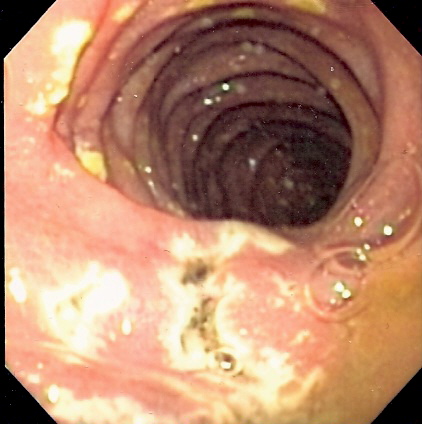
Syndrome caused by a gastrin-secreting tumor (gastrinoma) leading to excessive gastric acid hypersecretion and multiple refractory peptic ulcers.
Causes hard-to-treat ulcers and chronic diarrhea; often appears on exams as a classic cause of refractory peptic ulcer disease, sometimes as part of MEN1.
Severe, recurrent peptic ulcers (often multiple and in atypical locations like distal duodenum or jejunum) plus chronic diarrhea (acid inactivates pancreatic enzymes, causing malabsorption).
Ulcers that fail to heal with standard therapy (high-dose PPI) or without H. pylori/NSAIDs history → raises suspicion for ZES.
In 20–25% cases, part of MEN1 (patients may also show kidney stones from hyperparathyroidism or pituitary tumor signs).
Measure fasting gastrin level off acid suppression (gastrin >1000 pg/mL with gastric pH <2 is essentially diagnostic of ZES). If gastrin is moderately elevated (e.g. 200–1000), proceed with confirmatory testing.
Perform a secretin stimulation test for equivocal cases: in ZES, secretin paradoxically causes a large gastrin rise (≥120 pg/mL above baseline is a positive test).
Check gastric acid levels: gastric pH ≤2 (with high gastrin) supports ZES vs other causes of high gastrin like atrophic gastritis (which causes low acid/high pH).
Localize the gastrinoma with imaging: somatostatin receptor PET/CT (Ga-68 dotatate) is highly sensitive; also consider endoscopic ultrasound (EUS) for duodenal/pancreatic tumors.
Screen for MEN1 in confirmed ZES: check for hyperparathyroidism (calcium, PTH levels) and pituitary tumors (prolactin, etc).
inherited syndrome (MEN1) causing gastrinomas plus parathyroid and pituitary tumors (accounts for 25% of ZES cases)
High-dose PPIs are first-line to control acid hypersecretion and heal ulcers (e.g. omeprazole ~60 mg/day, much higher than standard GERD doses).
Surgical tumor resection if feasible: can be curative for localized gastrinomas (especially sporadic tumors >2 cm); MEN1 cases often have multiple small tumors (surgery targeted if large lesions).
For metastatic or unresectable ZES: use somatostatin analogs (octreotide) to reduce gastrin and slow tumor, and consider targeted therapies (e.g. everolimus, PRRT with radiolabeled octreotide) in advanced disease.
Secretin test paradox: secretin normally inhibits gastrin, but in ZES it causes an ↑ gastrin surge (diagnostic clue).
MEN1 – 3 P's (Pituitary, Parathyroid, Pancreas): gastrinomas (pancreatic/duodenal tumors) are one of the trio of tumors in MEN1.
Peptic ulcers in unusual locations (e.g. post-bulbar duodenum or jejunum) or multiple ulcers → suspect ZES instead of ordinary PUD.
Ulcers in atypical locations (distal duodenum/jejunum) or multiple ulcers that don't respond to therapy → red flag for ZES (do not just treat as routine PUD).
Stopping PPIs for diagnostic testing can cause acid rebound – monitor closely for ulcer bleeding or perforation during workup.
Diagnosed ZES patients should be evaluated for MEN1 signs (hypercalcemia, pituitary issues) – missing MEN1 means missing other tumors.
Refractory or multiple ulcers ± diarrhea → suspect ZES.
Hold acid-suppressing meds if possible and obtain fasting gastrin level (plus gastric pH).
If gastrin is modestly elevated → perform secretin stimulation test (positive = big gastrin rise).
If ZES confirmed biochemically → localize tumor with imaging (Ga-68 dotatate PET, EUS, CT/MRI).
Manage with high-dose PPI for acid control, resect tumor if localized (and screen for MEN1).
Middle-aged patient with multiple ulcers and chronic diarrhea, very high gastrin level → Zollinger-Ellison syndrome (gastrinoma).
Young adult with refractory ulcers plus kidney stones (hypercalcemia) → MEN1 syndrome (gastrinoma with hyperparathyroidism).
Secretin injection leads to a marked rise in gastrin levels → positive secretin stimulation test (confirms ZES).
Case 1
A 45‑year‑old man has a history of multiple peptic ulcers that persist despite high-dose PPI therapy. He now presents with foul-smelling diarrhea and weight loss.
Case 2
A 30‑year‑old patient with recurrent, hard-to-treat ulcers is found to have nephrolithiasis from high calcium levels. His father had a history of parathyroid surgery in his 40s.
Endoscopic view of multiple small ulcers in the distal duodenum in a patient with Zollinger-Ellison syndrome.