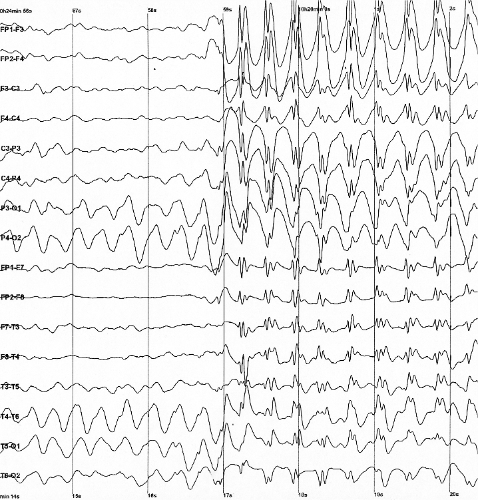
Severe childhood-onset epileptic encephalopathy with multiple refractory seizures, cognitive impairment, and a characteristic slow (<3 Hz) spike-and-wave EEG pattern.
Accounts for ~2–5% of childhood epilepsies and is notoriously difficult to treat. LGS causes lifelong disability with frequent injuries (from "drop" seizures) and developmental delays, making early recognition and specialized management critical.
Onset typically at 3–5 years old. Child presents with multiple seizure types – especially nocturnal tonicseizures (stiffening, often during sleep), frequent atonic "drop attacks" (sudden falls), and atypical absence seizures. Myoclonic jerks and generalized tonic-clonic seizures can also occur.
Parents report developmental delay or regression; intellectual disability is common and often precedes the seizures. Behavioral problems (hyperactivity, aggression, autistic features) may be noted.
Many cases have an underlying cause (e.g. tuberous sclerosis, perinatal brain injury, congenital malformation) or a history of infantile spasms (West syndrome) in infancy. In ~25% of cases, no cause is found (cryptogenic LGS).
Seizures are usually drug-resistant. Children may wear helmets due to frequent drops. Workup often reveals an abnormal EEG (see below) and possibly MRI findings of an underlying lesion.
Hallmark EEG: slow 1.5–2.5 Hz spike-and-wave discharges during wakefulness, plus bursts of fast rhythms in sleep. This differentiates LGS from typical absence epilepsy (which has 3 Hz spike-waves).
Think LGS in any child with mixed seizure types and cognitive impairment. A history of West syndrome (infantile spasms) or other early epilepsy that evolves into new seizure types by age 3–5 strongly suggests LGS.
Always search for a cause: perform brain MRI to check for structural lesions (malformations, old injury, tumor) and consider genetic testing (many de novo gene mutations like SCN1A, CHD2, etc. are linked to LGS). Identifying an etiology can guide treatment (e.g., if tuberous sclerosis, manage that condition too).
Plan for multimodal therapy – seizures usually require combined treatments (multiple medications, diet, devices) and involvement of neurology specialists.
Condition
Distinguishing Feature
Myoclonic-astatic epilepsy (Doose syndrome)
onset in early childhood with drop seizures but normal development; EEG has faster (~3 Hz) spike-wave pattern
Dravet syndrome
Severe infantile epilepsy starting with febrile seizures (<1 year); multiple seizure types and SCN1A mutations, but different onset pattern
West syndrome (infantile spasms)
onset at <1 year with clustered spasms and chaotic hypsarrhythmia EEG; often an earlier phase that can progress into LGS
Start broad-spectrum AEDs: valproate is first-line (if no contraindications) for generalized seizures. However, monotherapy rarely suffices. Common adjuncts include rufinamide and clobazam, which are specifically indicated for LGS. Other agents often used are lamotrigine, topiramate, and felbamate (very effective but limited by toxicity). New therapies like cannabidiol (CBD) and fenfluramine have also shown seizure reduction in LGS.
Ketogenic diet is a proven non-pharmacologic treatment that can significantly reduce seizures, especially in medication-resistant cases. Vagus nerve stimulation (VNS) and corpus callosotomy (surgical disconnection of hemispheres) are options for refractory LGS to decrease seizure frequency (particularly drop attacks). A small subset with a focal lesion may benefit from resective surgery.
Maximize safety: ensure caregivers know seizure first aid and have rescue meds (e.g. benzodiazepines) for prolonged seizures. Because complete seizure control is rare, therapy aims to reduce seizure burden and improve quality of life.
Classic triad: multiple seizure types, intellectual disability, and slow (<3 Hz) spike-and-wave on EEG.
LGS is an epileptic encephalopathy – the ongoing seizures and abnormal EEG activity contribute to worsening cognitive and behavioral function.
Mnemonic: "LGS = Lots of seizures, Gradual intellectual decline, Slow spike-waves." Remember 2 Hz (LGS) vs 3 Hz (absence).
Frequent injuries: Atonic seizures cause sudden falls – wearing a helmet is often necessary to prevent head trauma. Any episode of prolonged loss of consciousness or clustering of seizures could indicate status epilepticus, which occurs in up to 50–75% of LGS patients and requires urgent treatment.
Poor prognosis: LGS is usually lifelong. Most patients continue to have seizures into adulthood (often requiring care). Only a minority achieve independence. There is a risk of SUDEP (sudden unexpected death in epilepsy) and a childhood mortality of ~3–7%, often related to accidents or underlying cause. Early aggressive therapy and supportive services are key to improving outcomes.
Obtain an EEG to confirm the signature slow spike-and-wave pattern; perform MRI brain to check for structural causes. Add genetic/metabolic tests if no obvious cause.
If LGS is diagnosed, begin valproate (first-line) and add adjuncts as needed for seizure control. Consider ketogenic diet early if drugs fail.
Refer to a pediatric neurologist/epileptologist. Implement therapy plans including possible VNS or callosotomy for refractory cases, and ensure caregivers have a seizure action plan (rescue meds, safety precautions).
Long-term, involve an interprofessional team: neurology, dietitian (for keto diet), therapists (for developmental support), and consider clinical trials or newer therapies if available.
Exam scenario: A 4-year-old with developmental delay and a history of infantile spasms now has frequent drop attacks (sudden falls) and staring spells. EEG shows a 2 Hz spike-and-wave pattern. → This is classic Lennox-Gastaut syndrome.
Child with multiple refractory seizures (atonic and tonic) requiring a helmet for protection, plus cognitive impairment → suggests LGS. Exams often emphasize the mixed seizure types and characteristic EEG.
Case 1
A 4‑year‑old boy with a history of infantile spasms presents with new seizures.
EEG showing generalized spike-and-wave discharges (in LGS these occur at a slow ~2 Hz frequency)